In 2012, the longitudinal marking for high-risk areas for piracy was moved from 65 degrees east to 78 degrees east in the Arabian Sea by the International Maritime Organization. What impact does this have on India’s maritime security concerns? (UPSC 2014)
The 2012 shift of the piracy high-risk area from 65°E to 78°E brought the warning zone close to India’s west coast, making piracy a direct maritime security concern.
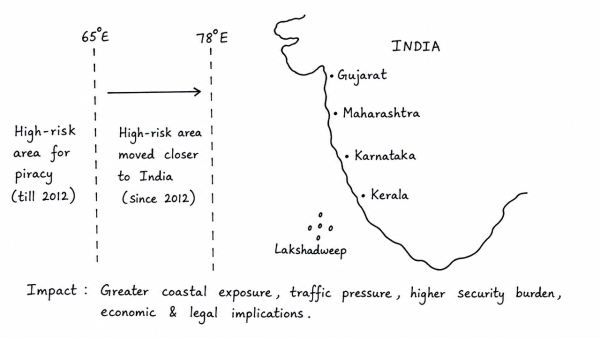
- Greater coastal exposure: Waters off Kerala, Karnataka, Maharashtra, Gujarat and Lakshadweep required tighter surveillance.
- Traffic pressure near shore: Ships diverted closer to India, increasing risks of collision, infiltration and suspicious activity along busy sea lanes.
- Higher security burden: The Navy and Coast Guard had to intensify patrols, escorts and monitoring, straining resources.
- Economic and legal effects: Insurance, freight and trade costs rose, while armed guards on merchant ships and movement near fishing zones raised sovereignty and safety concerns.
Overall, the shift widened India’s maritime security challenge by linking piracy control with coastal defence, trade protection and naval preparedness.
Originally written on
August 29, 2026
and last modified on
August 29, 2026.