“If amendment bill to the Whistleblowers Act, 2011 tabled in the Parliament is passed, there may be no one left to protect.” Critically evaluate. (UPSC 2015)
The statement is largely valid. The proposed amendment would have protected secrecy more than whistleblowers, especially in corruption-prone areas where disclosure is most needed.
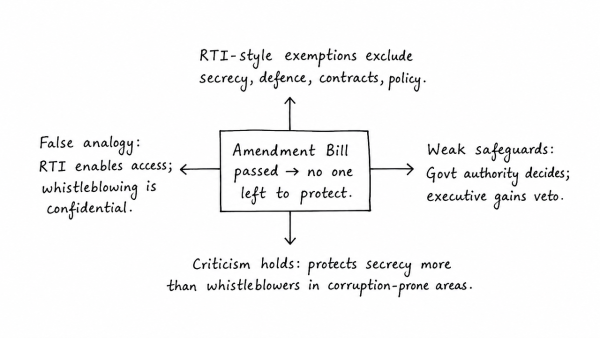
- Why the criticism holds: By importing RTI-style exemptions on sovereignty, security, Cabinet papers, fiduciary and commercial information, the Bill would exclude complaints on defence, contracts and policy-making.
- False analogy: RTI enables public access, while whistleblowing is confidential disclosure to a competent authority. Treating both alike defeats the purpose of protection.
- Weak safeguards: A government-designated authority deciding disputes would have given the executive a veto over sensitive corruption complaints.
However, the concern for national security is genuine. Sensitive strategic or personal data cannot be left unprotected, and malicious leaks must be checked.
Still, a balanced law should protect honest disclosures, carve out only narrow exceptions, and ensure anonymity, fast retaliation relief and independent oversight. Without this, the Act may become a shield for secrecy, not for public interest.
Originally written on
August 30, 2026
and last modified on
August 30, 2026.