Human rights activists constantly highlight the view that the Armed Forces (Special Powers) Act, 1958 (AFSPA) is a draconian act leading to cases of human rights abuses by the security forces. What sections of AFSPA are opposed by the activists? Critically evaluate the requirement with reference to the view held by the Apex Court. (UPSC 2015)
AFSPA, meant to aid civil power in disturbed areas, is opposed for its wide discretion and weak accountability.
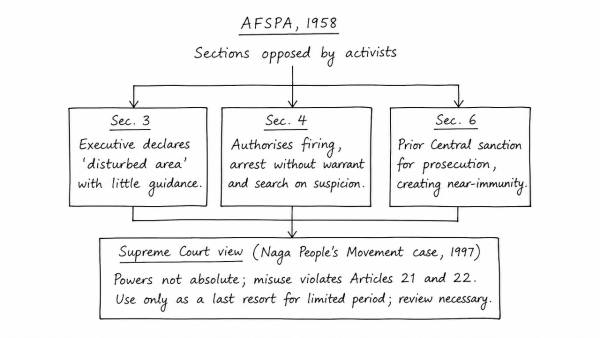
- Sections opposed: Section 3 lets the executive declare an area “disturbed” with little objective guidance; Section 4 authorises firing, arrest without warrant and search on suspicion; Section 6 requires prior Central sanction for prosecution, creating near-immunity.
- Critical view: While such powers may be justified to tackle insurgency and protect forces, vague criteria and prolonged use can lead to excesses, alienation and violations of Articles 21 and 22.
The Supreme Court in Naga People’s Movement upheld AFSPA but imposed safeguards of minimal force, periodic review and prompt handing over of detainees, and in EEVFAM held that AFSPA is not a licence to kill and every encounter death must be investigated.
Originally written on
August 30, 2026
and last modified on
August 30, 2026.