How would the recent phenomena of protectionism and currency manipulations in world trade affect macroeconomic stability of India? (UPSC 2018)
Protectionism and currency manipulation in world trade can disturb India’s external balance, raise inflation and weaken growth. Their impact is felt most sharply through trade, capital flows and exchange rate stability.
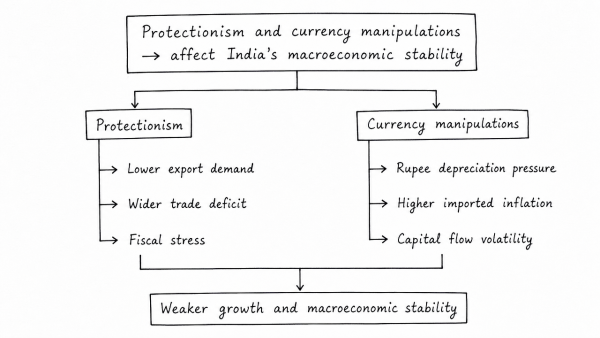
Effects of protectionism
- Lower export demand: Tariffs, CBAM-type rules and non-tariff barriers can reduce India’s market access in goods such as textiles, steel and chemicals.
- Wider trade deficit: Costlier imports of oil, fertilisers and raw materials raise the merchandise trade gap and put pressure on the current account.
- Fiscal stress: Supply-chain disruption forces higher subsidy and support spending, especially on food and energy, raising the fiscal deficit.
- Growth slowdown: Weaker external demand can cut industrial output, jobs and private investment.
Effects of currency manipulation
- Rupee volatility: Competitive devaluation by trading partners and sharp dollar movements can weaken the rupee and increase uncertainty.
- Imported inflation: A weaker rupee makes crude oil, fertilisers and electronics costlier, feeding inflation and hurting consumers.
- Capital flow risks: Sudden exchange-rate shifts may trigger portfolio outflows and stress the financial market.
- Reserve pressure: RBI intervention can stabilise the rupee, but frequent defence of the currency may reduce forex reserves.
Why India remains relatively resilient
- Large foreign exchange reserves provide a strong buffer.
- Services exports and remittances support the current account.
- Export diversification and FTAs help cushion shocks.
Thus, protectionism and currency manipulation can reduce external competitiveness, raise inflation and strain the fiscal and external accounts. India must respond through export diversification, resilient supply chains, prudent forex management and deeper trade integration.
Originally written on
September 1, 2026
and last modified on
September 1, 2026.