How will you explain that medieval Indian temple sculptures represent the social life of those days? (UPSC 2022)
Medieval Indian temple sculptures are not just religious art; they are visual records of society. They depict the everyday world, showing how people lived, worked, dressed, worshipped and entertained themselves.
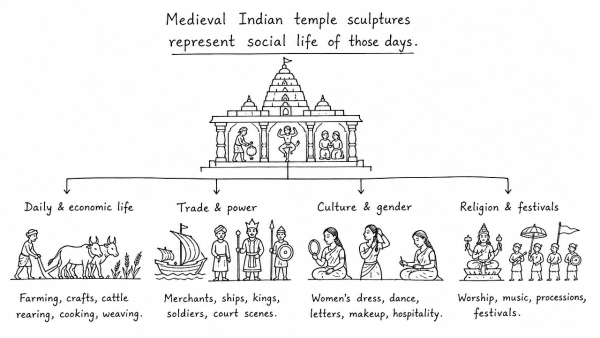
- Daily and economic life: carvings show ploughing, sowing, harvesting, cattle rearing, cooking, weaving, pottery and metalwork, revealing agrarian and craft-based livelihoods.
- Trade and power: merchant groups, ships, foreign traders, kings, queens, soldiers and court scenes reflect commerce, royal authority and social hierarchy.
- Culture and gender: sculptures of women applying make-up, dressing hair, dancing, writing letters or serving guests show fashion, domestic roles and aesthetic ideals. Devadasis and musicians indicate the importance of temple culture.
- Recreation and beliefs: wrestling, hunting, music, dance and board games point to leisure. Mithuna and erotic figures suggest social acceptance of kama within life’s goals.
Thus, temple sculptures acted as stone chronicles of medieval society, capturing its occupations, values, pleasures and stratification.
Originally written on
September 3, 2026
and last modified on
September 3, 2026.