How is the Indian concept of secularism different from the western model of secularism? Discuss. (UPSC 2018)
Indian secularism is not a rigid separation of religion and state. It is based on equal respect for all faiths and a principled distance where the State may intervene to secure reform, justice and public order.
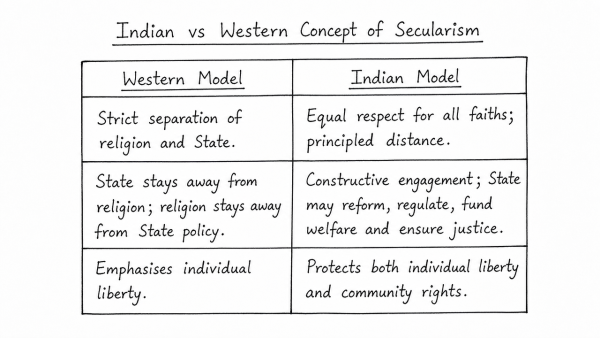
- Western model: Relies on a strict wall of separation. The State stays away from religion and religion stays away from State policy.
- Indian model: Accepts constructive engagement. The State may regulate religious institutions, fund welfare measures and reform oppressive practices.
- Rights focus: The Western model emphasises individual liberty, while the Indian model protects both individual rights and group rights of minorities under Articles 29 and 30.
- Social reform: Indian secularism permits intervention under Article 25(2) to advance reform, unlike the non-interventionist Western approach.
Thus, Indian secularism is best understood as sarva dharma sambhava with constitutional neutrality, not indifference. It combines freedom of religion with equality, dignity and social reform.
Originally written on
August 31, 2026
and last modified on
August 31, 2026.