How important are vulnerability and risk assessment for pre-disaster management? As an administrator, what are key areas that you would focus on in a Disaster Management System. (UPSC 2013)
Vulnerability and risk assessment is the backbone of pre-disaster management. It shifts disaster policy from relief after impact to prevention, preparedness and mitigation before impact.
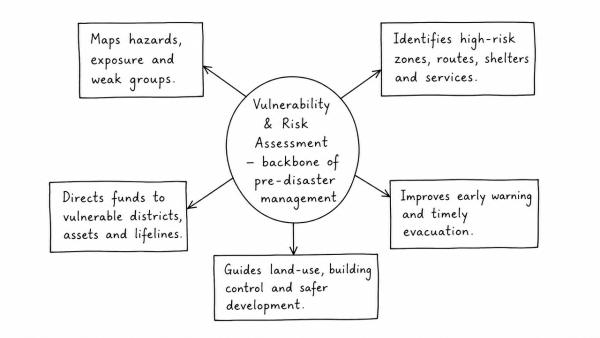
- Why it matters: It maps hazards, exposure and weak groups, such as the poor, elderly and disabled.
- Better planning: It helps identify high-risk zones, safe evacuation routes, shelters and priority services.
- Efficient spending: Funds can be directed to the most vulnerable districts, assets and lifelines.
- Early warning: Risk maps improve location-specific alerts and timely evacuation.
- Safer development: It guides land-use planning, building control and siting of schools, hospitals and roads.
- Administrative focus: prepare district and local disaster plans;
- strengthen real-time data, GIS mapping and communication systems;
- conduct mock drills, training and community awareness;
- ensure coordination among police, health, fire, revenue and local bodies;
- protect critical infrastructure and keep stockpiles, shelters and volunteers ready.
Thus, VRA makes disaster management scientific, targeted and accountable, while administrators must turn risk knowledge into quick, coordinated and resilient action.
Originally written on
August 29, 2026
and last modified on
September 7, 2026.