How have the recommendations of the 14th Finance Commission of India enabled the states to improve their fiscal position? (UPSC 2021)
The 14th Finance Commission gave states a far stronger fiscal base by expanding untied transfers and reducing central control. It helped them spend more according to local priorities and improved predictability in state finances.
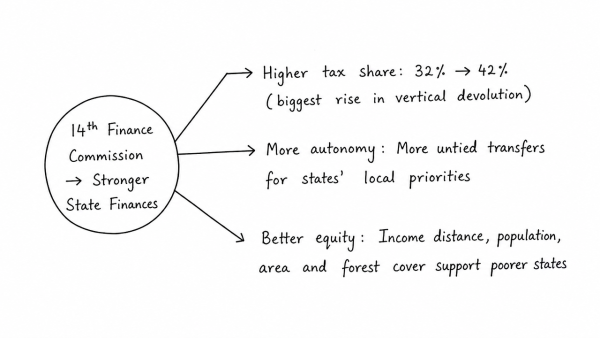
- Higher tax share: Increased states’ share in the divisible pool from 32% to 42%, the biggest ever rise in vertical devolution.
- More autonomy: A larger part of transfers became untied, allowing states to plan welfare, infrastructure and social sector spending with greater freedom.
- Better equity: Used income distance, population, area and forest cover to support poorer and ecologically rich states.
- Revenue support: Gave post-devolution revenue deficit grants to states facing fiscal stress.
- Local finances: Large grants to Panchayats and municipalities strengthened grassroots spending and eased state burden.
- Fiscal discipline: Kept deficit targets and borrowing incentives, encouraging prudent budgeting.
Thus, the Commission improved state fiscal space, reduced dependence on discretionary central grants, and made state finances more flexible, predictable and responsible.
Originally written on
September 2, 2026
and last modified on
September 2, 2026.