How have digital initiatives in India contributed to the functioning of the education system in the country? Elaborate your answer. (UPSC 2020)
Digital initiatives have begun to transform India’s education system by widening access, improving governance and making learning more flexible. They have helped bridge gaps created by distance, shortage of teachers and uneven infrastructure, though the digital divide still limits full impact.
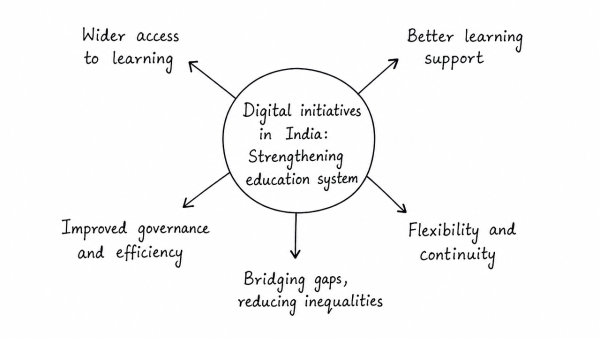
- Wider access to learning: PM eVIDYA, DIKSHA, SWAYAM and SWAYAM Prabha provide curriculum-based lessons, online courses and DTH support to school and higher education learners. They have expanded reach to remote areas and supported students who cannot attend regular classes.
- Better learning support: Platforms such as SATHEE and e-Jaadui Pitara offer free coaching, self-assessment and age-appropriate digital content. This improves exam preparation, foundational learning and learner engagement.
- Data-driven administration: UDISE+, Vidya Samiksha Kendras and NDEAR enable real-time tracking of enrolment, attendance, infrastructure and learning outcomes. This helps governments plan resources better and take corrective action quickly.
- Flexibility and mobility: APAAR ID and the Academic Bank of Credits create a digital record of students’ academic history and allow paperless credit transfer. This supports ease of movement across institutions and reduces administrative delays.
- Infrastructure improvement: Rising school computer and internet access has strengthened digital delivery. Such progress is essential for blended learning and future-ready education.
| Positive impact | Key outcome |
| Access | Learning beyond classroom boundaries |
| Governance | Evidence-based decision-making |
| Equity | Support to marginalised and remote learners |
Overall, digital initiatives have made Indian education more inclusive, accountable and adaptive. Their success, however, depends on closing the connectivity gap, strengthening device access and building digital skills among teachers and students.
Originally written on
September 2, 2026
and last modified on
September 2, 2026.