How globalization has led to the reduction of employment in the formal sector of the Indian economy? Is increased informalization detrimental to the development of the country? (UPSC 2016)
Globalisation has integrated India into world markets, but it has also made firms cost-conscious, pushing them to cut regular jobs, outsource work and rely on short-term contracts. Hence, employment has shifted from secure formal jobs to informal and precarious arrangements.
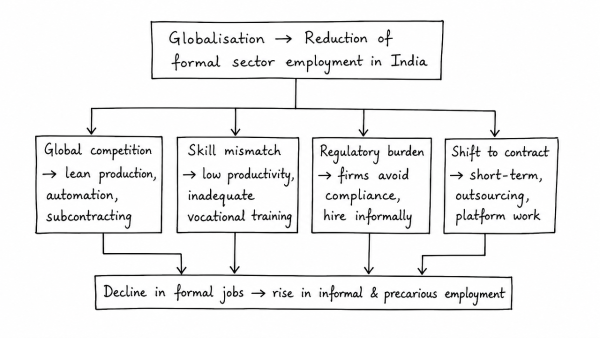
- Why formal jobs declined: Global competition has encouraged lean production, automation and subcontracting, reducing permanent hiring and expanding contract, home-based and platform work.
- Skill mismatch: Inadequate vocational training and low productivity keep many workers out of formal jobs and push them into low-paid informal work.
- Regulatory burden: To avoid compliance costs, many firms remain small or use intermediaries, limiting formal employment creation.
Is informalisation detrimental? Largely yes, because it lowers wages, weakens job security, reduces social protection, keeps productivity low and narrows the tax base; yet it also absorbs surplus labour and supports livelihoods when formal jobs are insufficient.
Thus, while some informal work is inevitable in a developing economy, excessive informalisation is harmful, and the policy focus should be on labour-intensive growth, skilling, easier compliance and expanded social security.