How do you justify the view that the level of excellence of the Gupta numismatic art is not at all noticeable in later times? (UPSC 2017)
The Gupta coins represent the peak of Indian numismatic art. Their fine portraiture, rich themes and technical finish were not matched in later periods.
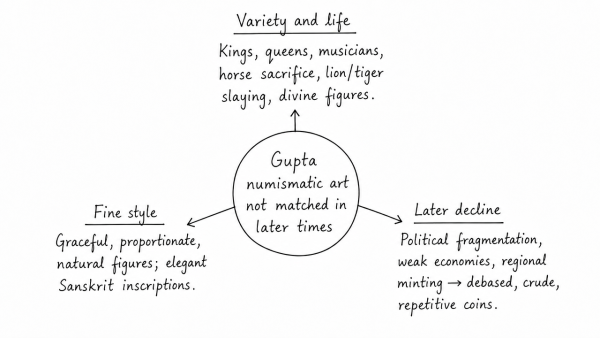
- Variety and life: Gupta rulers used coins to show kings, queens, musicians, horse sacrifice, lion or tiger slaying, and divine figures. This gave the coins a narrative and artistic value.
- Fine style: The figures are graceful, proportionate and natural. Inscriptions in elegant Sanskrit add literary beauty.
- Later decline: After the Guptas, political fragmentation, weak economies and regional minting reduced quality. Coins became debased, crude and repetitive.
- Restricted themes: Rajput coins mostly used the Bull and Horseman type, while many south Indian coins carried only dynastic symbols such as bull, fish, boar or tiger.
- Reduced artistry: Under the Sultanate and later rulers, coinage was mainly functional and often avoided human or animal figures.
Thus, later coinage may show administrative skill or calligraphy, but the creative excellence, realism and diversity of Gupta numismatic art remain unmatched.
Originally written on
August 31, 2026
and last modified on
August 31, 2026.