How do subsidies affect the cropping pattern, crop diversity and economy of farmers? What is the significance of crop insurance, minimum support price and food processing for small and marginal farmers? (UPSC 2017)
Subsidies alter farm choices by changing relative costs and risks. When poorly targeted, they can distort cropping patterns, weaken diversity and strain farm finances.
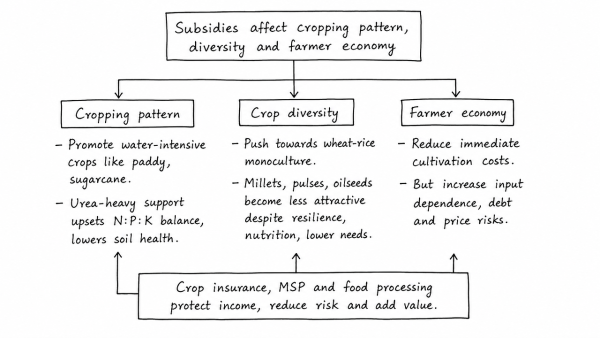
- Cropping pattern: Cheap electricity, water and fertiliser encourage water-intensive crops like paddy and sugarcane, even in unsuitable regions. Urea-heavy support also upsets the N:P:K balance, lowering soil health and long-term productivity.
- Crop diversity: Assured returns and input subsidies push farmers towards wheat-rice monoculture. Millets, pulses and oilseeds become less attractive despite their resilience, nutrition value and lower resource needs.
- Farmer economy: Subsidies reduce immediate cultivation costs, but overuse of groundwater, chemicals and land degradation raises future costs and debt. Large farmers often capture a bigger share of these benefits.
- Crop insurance: It cushions small and marginal farmers against losses from drought, flood, hailstorm and erratic rain, helping them recover without falling into distress debt.
- MSP: It provides a price floor, prevents distress sales and improves bargaining power, especially where market access is weak.
- Food processing: It adds value, cuts post-harvest losses, creates local jobs and improves price realisation through linkages with aggregators, cold chains and farmer collectives.
Therefore, subsidies should be better targeted to promote sustainable cropping, while crop insurance, MSP and food processing are crucial for risk reduction, income stability and stronger livelihoods for small and marginal farmers.
Originally written on
August 31, 2026
and last modified on
August 31, 2026.