How do pressure groups influence Indian political process? Do you agree with this view that informal pressure groups have emerged as more powerful than formal pressure groups in recent years? (UPSC 2017)
Pressure groups influence Indian politics by mobilising opinion, shaping legislation and pressuring the State through protest, lobbying and PILs.
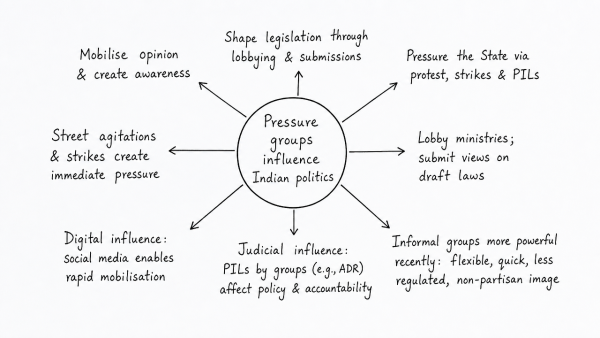
- Methods: street agitations and strikes create immediate pressure; business bodies and trade unions lobby ministries and submit views on draft laws.
- Digital and judicial influence: social media enables rapid mobilisation, while PILs by groups like ADR can affect policy and accountability.
Informal vs formal groups: Informal groups have often become more powerful recently because they are flexible, quick to mobilise, less regulated and can project a non-partisan image, as seen in farmers’, student and online campaigns.
Yet formal groups still matter because they have stable organisation, expertise, resources and regular access to policymakers, so informal groups dominate short, high-salience issues while formal groups remain stronger in sustained policy influence.
Originally written on
August 31, 2026
and last modified on
August 31, 2026.