How did land reforms in some parts of the country help to improve the socio-economic conditions of marginal and small farmers? (UPSC 2021)
Land reforms in several states improved the lives of marginal and small farmers by giving them security, assets and bargaining power. They reduced feudal control and made cultivation more rewarding for the actual tiller.
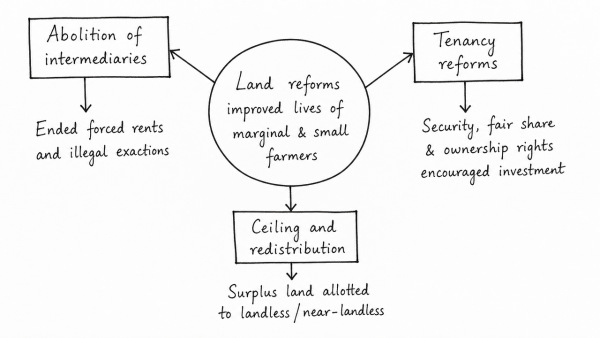
- Abolition of intermediaries: Zamindars and similar rent-seeking classes were removed, ending forced rents and illegal exactions.
- Tenancy reforms: Tenants got legal protection, fairer crop shares and, in some cases, ownership rights. This encouraged investment in irrigation, soil improvement and better seeds.
- Ceiling and redistribution: Surplus land was allotted to the landless and near-landless, raising household assets and reducing rural inequality.
- Consolidation of holdings: Fragmented plots were combined, making the use of tractors, tube wells and other modern inputs more viable.
- Access to credit: Recorded titles helped farmers secure loans from banks and cooperatives instead of relying on moneylenders.
In states such as West Bengal and Kerala, reforms also improved social dignity, housing security and political participation. Overall, land reforms made small farming more secure, productive and less exploitative.
Originally written on
September 3, 2026
and last modified on
September 3, 2026.