Has the Cadre based Civil Services Organization been the cause of slow change in India? Critically examine. (UPSC 2014)
The cadre-based civil services system has helped preserve unity, continuity and neutrality, but its rigidity can also slow reform.
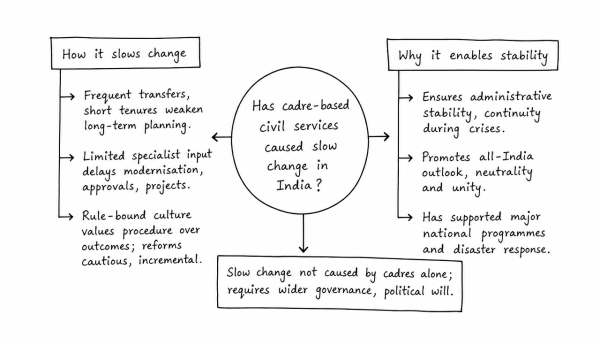
- How it slows change: Frequent transfers, short tenures and a generalist mindset weaken long-term planning. In technical areas, limited specialist input delays modernisation, approvals and project execution. A rule-bound culture often values procedure over outcomes, making reforms cautious and incremental.
- Balanced view: The system also ensures administrative stability, an all-India outlook and continuity during crises, and has supported major national programmes and disaster response. Slow change is not caused by cadres alone; federal complexity, litigation, weak political will and poor coordination are major constraints.
Thus, cadre-based services are a partial cause of slow change, but reform through longer tenures, lateral entry, specialist cadres and capacity building is preferable to replacement.
Originally written on
August 29, 2026
and last modified on
August 29, 2026.