‘Globalization is generally said to promote cultural homogenization but due to this cultural specificities appear to be strengthened in the Indian Society.’ Elucidate. (UPSC 2018)
Globalisation has increased exposure to a common world culture through brands, media and digital platforms. Yet in India, it has not simply erased differences; it has also led communities to assert and market their own language, food, craft and faith-based identities more strongly.
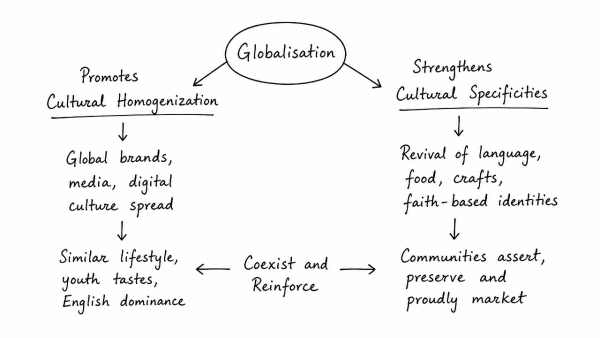
How cultural homogenisation is visible
- Urban consumer habits are becoming similar: global fast food, fashion labels and lifestyle trends shape youth culture.
- English dominates higher education, business and technology, often reducing the space for smaller regional languages.
- Social media and streaming platforms spread similar images, tastes and aspirations across regions.
Why cultural specificities are also strengthening
- Glocalisation: Global platforms encourage local content. Regional OTT viewing now forms a major share of online entertainment, reviving Marathi, Tamil, Telugu and Bengali cultures.
- Heritage economy: Geographical Indications protect and promote products such as Banarasi sarees, Channapatna toys and tribal crops, turning local skills into premium brands.
- Language revival: Digital tools such as Bhashini and Adi-Vaani support translation and preservation of scheduled and tribal languages.
- Cultural pride: UNESCO recognition of dance and craft traditions, along with the growth of spiritual tourism at Kashi, Ayodhya and Ujjain, has deepened attachment to local heritage.
- Economic value of tradition: Yoga, Ayurveda and millets have moved from being seen as traditional to being valued as modern, healthy and globally relevant.
Implications
| Homogenising force | Creates shared lifestyles and consumer patterns |
| Counter-force | Strengthens regional identity, pride and cultural entrepreneurship |
Thus, globalisation in India works through both convergence and resistance. Rather than producing uniformity alone, it has encouraged a selective renewal of cultural specificities, giving local identities new confidence in a global age.
Originally written on
August 31, 2026
and last modified on
August 31, 2026.