Given the vulnerability of Indian agriculture to vagaries of nature, discuss the need for crop insurance and bring out the salient features of the Pradhan Mantri Fasal Bima Yojana (PMFBY). (UPSC 2016)
Indian agriculture remains highly exposed to rainfall failure, floods, heat waves and pest outbreaks. With a large share of farms rain-fed and smallholdings dominant, even one bad season can push farmers into debt and distress.
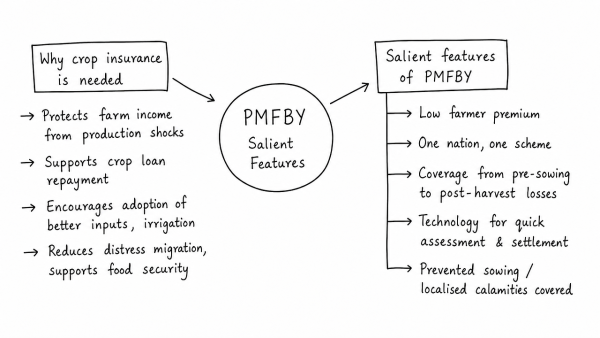
- Why crop insurance is needed: It protects farm income against production shocks, supports repayment of crop loans, and encourages farmers to adopt better seeds, fertilisers and irrigation without fear of total loss.
- Wider gains: It reduces distress migration, supports food security, and helps stabilise rural demand and investment.
- Salient features of PMFBY:
- Low farmer premium: 2% for kharif, 1.5% for rabi and 5% for horticultural/commercial crops; the balance is subsidised.
- Coverage from pre-sowing losses to standing crop damage, localised calamities, post-harvest losses for a limited period, and prevented sowing.
- Voluntary enrolment for all farmers.
- No premium cap, so claims are linked to the full sum insured.
- Use of technology for yield assessment, weather data and faster claim settlement through DBT.
Thus, crop insurance is essential as a risk-management tool, but its success depends on timely assessment, wider awareness, and prompt claim settlement so that it becomes a genuine shield for farmers.
Originally written on
August 30, 2026
and last modified on
August 30, 2026.