“For achieving the desired objectives, it is necessary to ensure that the regulatory institutions remain independent and autonomous.” Discuss in the light of the experiences in recent past. (UPSC 2015)
Regulatory institutions can achieve their mandate only when they are free from executive control, political pressure and conflict of interest. Recent experience shows that weak autonomy reduces public trust, delays decisions and makes regulation appear selective.
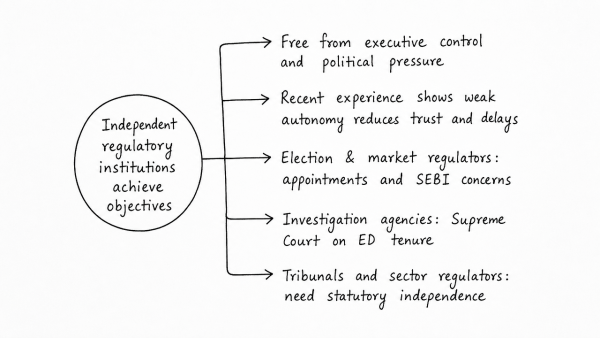
- Election and market regulators: The appointments process for the Election Commission after the 2023 law, and controversy around SEBI disclosures, revived concerns about executive influence and credibility.
- Investigation agencies: Supreme Court rulings on ED tenure showed that extensions and service conditions cannot be used to keep directors dependent on the government.
- Tribunals and sector regulators: Tribunal reforms and recurring friction in TRAI and CCI show that financial, administrative and staffing control can weaken quasi-judicial independence.
At the same time, autonomy must be matched by accountability, transparency and fixed procedures. A balanced framework of secure tenure, independent appointments, adequate funds and judicial review is essential for effective regulation and democratic legitimacy.
Originally written on
August 30, 2026
and last modified on
August 30, 2026.