Food Security Bill is expected to eliminate hunger and malnutrition in India. Critically discuss various apprehensions in its effective implementation along with the concerns it has generated in WTO. (UPSC 2013)
The Food Security Act can reduce hunger by making access to food a legal entitlement, but its success depends on efficient delivery, nutrition quality and fiscal sustainability.
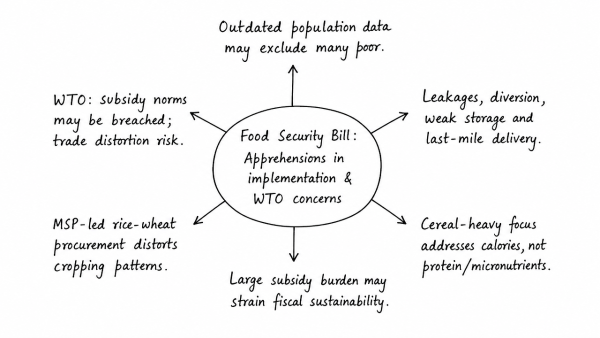
- Implementation concerns: Outdated population data can exclude many poor households. Leakages, diversion, weak storage and last-mile delivery persist despite reforms like Aadhaar, ePoS and ONORC.
- Nutrition and fiscal concerns: A cereal-heavy entitlement addresses calories, not protein and micronutrient deficiency. Large procurement and free grain support strain the budget and may crowd out spending on health and agriculture.
- Agrarian distortion: MSP-led rice-wheat procurement encourages water-intensive monoculture, harming groundwater, soil and crop diversity.
- WTO concerns: Public stockholding and input subsidies may breach the 10% de minimis limit under the Agreement on Agriculture, especially for rice, while large stocks are seen as trade-distorting. India has depended on the peace clause, but a permanent solution remains pending.
Originally written on
August 28, 2026
and last modified on
September 7, 2026.