Explain various types of revolutions that took place in agriculture after independence in India. How have these revolutions helped in poverty alleviation and food security in India? (UPSC 2017)
After independence, India witnessed several agricultural revolutions that changed farming from subsistence to surplus. These revolutions raised output, diversified farm incomes and strengthened rural livelihoods.
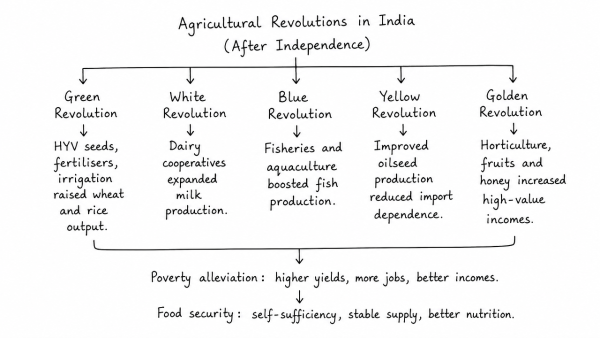
- Green Revolution: use of HYV seeds, fertilisers and irrigation raised wheat and rice output.
- White Revolution: dairy cooperatives expanded milk production and made India a global leader in milk.
- Blue Revolution: fisheries and aquaculture boosted fish production and coastal employment.
- Yellow Revolution: improved oilseed production reduced dependence on edible oil imports.
- Golden Revolution: horticulture, fruits and honey increased high-value farm incomes.
- Poverty alleviation: higher yields, allied activities and year-round work raised farm incomes, especially for small farmers, landless labourers and women in dairy, poultry and fisheries.
- Food security: grain surpluses built buffer stocks and supported PDS, while milk, fish, eggs, fruits and vegetables improved nutrition and reduced hidden hunger.
Together, these revolutions made Indian agriculture more productive, resilient and inclusive, though balanced growth, water conservation and sustainable practices remain essential.
Originally written on
August 31, 2026
and last modified on
August 31, 2026.