Explain the biological mechanism through which immunosuppressants trigger post-transplant lymphoproliferative disorders. How can oncological risks be mitigated in organ transplant recipients?
Post-transplant lymphoproliferative disorder (PTLD) occurs when immunosuppressants blunt T-cell surveillance, allowing EBV-infected B cells to escape control and proliferate. EBV may reactivate after transplantation; viral proteins such as LMP1 and EBNA2 further drive B-cell growth, especially in EBV-negative recipients of EBV-positive organs, children, and patients on intense regimens.
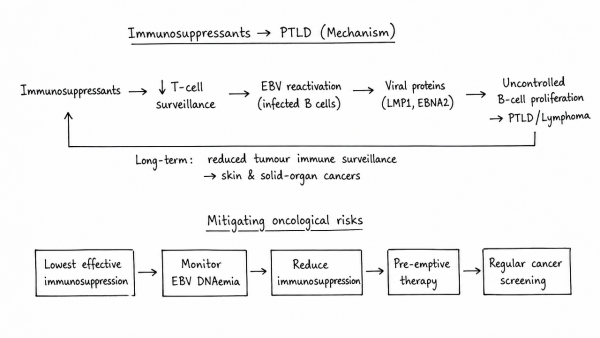
Mechanism: Reduced T-cell cytotoxicity removes the main brake on latent EBV, leading to uncontrolled lymphoid expansion and, sometimes, lymphoma. Long-term immunosuppression also weakens tumour immune surveillance, increasing skin and solid-organ cancers.
Risk reduction: Use the lowest effective immunosuppression, monitor EBV DNAemia, reduce therapy early when viral load rises, consider mTOR-based regimens in selected patients, and ensure regular skin checks, age-appropriate cancer screening, sun protection, and lifestyle counselling.