Explain intra-generational and inter-generational issues of equity from the perspective of inclusive growth and sustainable development. (UPSC 2020)
Equity in development has two dimensions. Intra-generational equity means fair access to income, jobs, health, education and services among people of the same generation. Inter-generational equity means using resources in a way that does not reduce the chances of future generations to meet their needs.
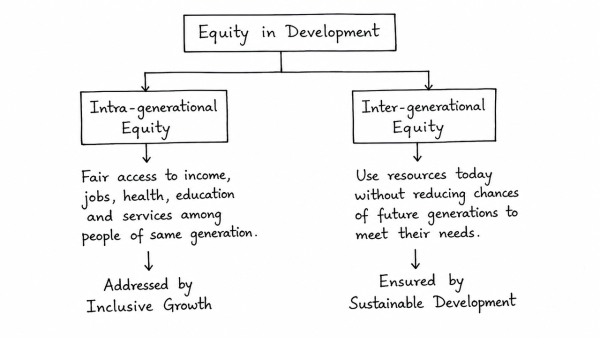
- Inclusive growth mainly addresses intra-generational equity by reducing gaps between rich and poor, rural and urban, men and women, and across regions and social groups.
- It requires targeted welfare, quality public services, financial inclusion, and wider participation in growth.
- Sustainable development rests on inter-generational equity: conserving water, forests, soil, biodiversity and climate stability, while avoiding excessive debt and pollution.
- It calls for clean energy, efficient resource use, and long-term planning.
In India, inequalities in income, consumption, gender participation and regional development show weak intra-generational equity. At the same time, groundwater depletion, climate stress and rising public debt threaten inter-generational justice. True development must therefore be both socially inclusive today and environmentally and fiscally responsible for tomorrow.
Originally written on
September 2, 2026
and last modified on
September 2, 2026.