Explain how Private Public Partnership arrangements, in long gestation infrastructure projects, can transfer unsustainable liabilities to the future. What arrangements need to be put in place to ensure that successive generations’ capacities are not compromised? (UPSC 2014)
PPP projects in roads, ports or power can shift today’s costs to future taxpayers when risks are poorly allocated. How liabilities arise: revenue, traffic or exchange-rate guarantees may be invoked later; annuity/availability payments defer large obligations for 15–30 years; and off-budget commitments or bailouts create hidden public debt, crowding out spending on health, education and climate action.
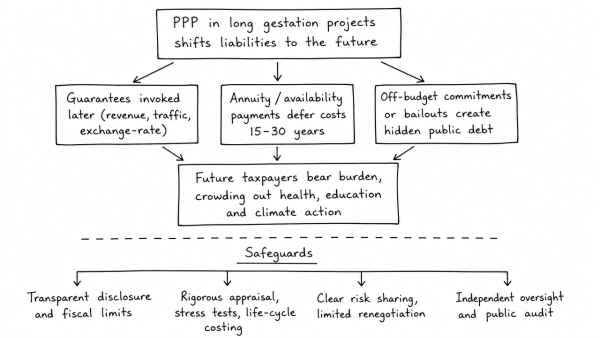
Safeguards: all contingent liabilities should be transparently disclosed and capped under fiscal rules; projects must undergo rigorous appraisal, stress tests and life-cycle costing; concession agreements should specify risk-sharing and limited renegotiation; and independent audit, monitoring and periodic review should check whether commitments remain affordable.
Thus, PPPs must be treated as long-term public obligations, with prudence and transparency so that one generation does not compromise the capacity of the next.