Exercise of CAG’s powers in relation to the accounts of the Union and the States is derived from Article 149 of the Indian Constitution. Discuss whether audit of the Government’s policy implementation could amount to overstepping its own (CAG) jurisdiction. (UPSC 2015)
The Comptroller and Auditor General derives its authority from Article 149, which lets Parliament define its duties and powers. Under the CAG Act, 1971, audit is not limited to book-keeping; it also covers economy, efficiency and effectiveness of public spending.
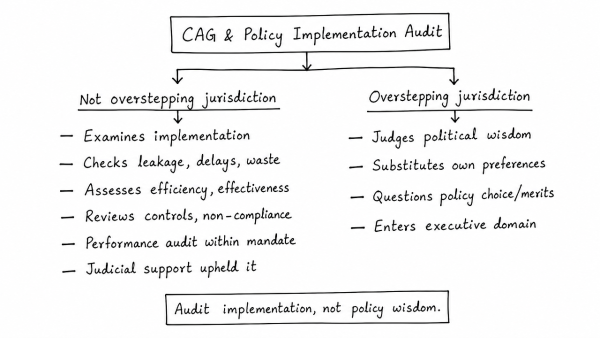
- No overstepping when the audit examines implementation, leakage, delays, waste, poor controls, or non-compliance with rules.
- It becomes a concern only if the CAG judges the political wisdom of a policy, or substitutes its own preferences for executive choice.
- Judicial support has upheld performance audit as part of CAG’s mandate, since value-for-money checks are inbuilt in public audit.
- Proper line: policy goal is for the सरकार and legislature; delivery and use of funds are for audit.
- Public value: such scrutiny strengthens accountability, but must remain factual, objective and within statutory limits.
Thus, auditing policy implementation does not amount to overstepping if it focuses on execution and outcomes, not on the merit of policy itself.
Originally written on
August 30, 2026
and last modified on
August 30, 2026.