Examine the uniqueness of tribal knowledge system when compared with mainstream knowledge and cultural systems. (UPSC 2021)
Tribal knowledge systems are distinct because they arise from lived experience, local ecology and collective memory. Unlike mainstream systems, they are not merely about control of nature or profit, but about coexistence, balance and continuity.
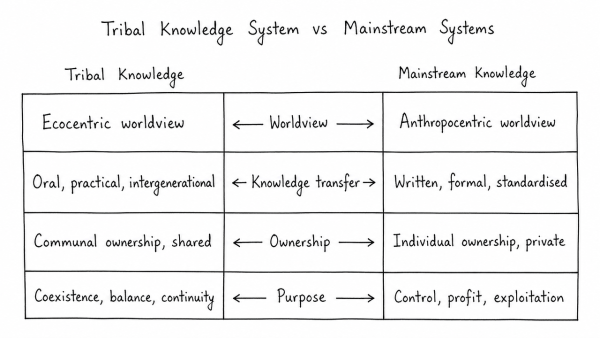
- Worldview: Tribal societies are largely ecocentric. Forests, hills and rivers are often seen as sacred and living, which supports conservation and low conflict with wildlife.
- Knowledge transfer: It is mainly oral, practical and intergenerational, through stories, songs, rituals and observation, unlike formal, written and standardised mainstream education.
- Ownership: Knowledge is usually communal and shared, while mainstream systems stress individual authorship, patents and copyrights.
- Use and adaptation: Tribal medicine, seed sharing and climate cues are highly localised and sustainable, unlike uniform, market-driven models.
At the same time, tribal knowledge is not opposed to science; it complements it through biodiversity insight, resilience and ethical resource use. Its uniqueness lies in being community-based, place-specific and deeply integrated with nature.
Originally written on
September 2, 2026
and last modified on
September 2, 2026.