Examine the role of ‘Gig Economy’ in the process of empowerment of women in India. (UPSC 2021)
Gig economy has become an important entry point for women into paid work in India, especially where social norms, care duties and mobility limits restrict regular jobs. It offers flexibility, quick income and digital payment, but empowerment remains uneven.
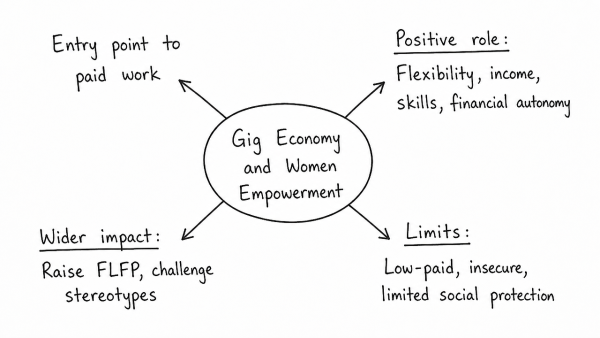
- Positive role: It helps women balance paid work with household responsibilities, and gives first-time earners access to bank transfers, skills and financial autonomy.
- Wider impact: It can raise female labour force participation and challenge gender stereotypes by opening roles in driving, delivery and services.
- Limits: Women are mostly concentrated in low-paid, “safe” tasks like beauty, tutoring and domestic work. Safety risks, lack of social security, algorithmic control and weak grievance systems reduce real empowerment.
- Structural barriers: Digital divide, low asset ownership and unpaid care work still exclude many women from scale and better earnings.
Thus, the gig economy is a useful but incomplete tool of women’s empowerment. Its potential will be realised only with safety, equal access, fair pay and social protection.
Originally written on
September 2, 2026
and last modified on
September 2, 2026.