Examine the linkages between the 19th century ‘Indian Renaissance’ and the emergence of national identity. (UPSC 2019)
The 19th century Indian Renaissance was not only social reform; it generated the ideas and confidence behind nationalism by challenging orthodoxy and colonial stereotypes and helping Indians imagine a shared past and future.
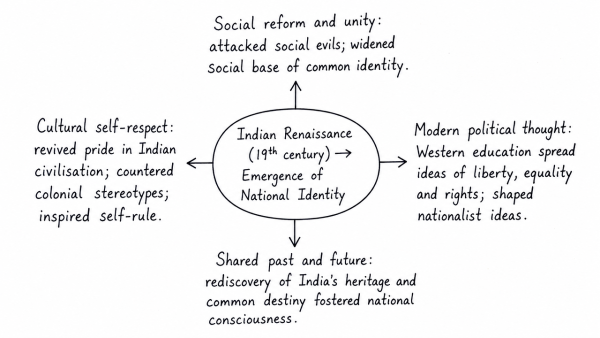
- Social reform and unity: Raja Ram Mohan Roy, Vidyasagar and Jyotirao Phule attacked sati, caste oppression and women’s subordination, widening the social base of a common identity.
- Cultural self-respect: Dayanand Saraswati and Vivekananda revived pride in Indian civilisation, countering British claims of superiority and inspiring self-rule.
- Modern political thought: Western education spread ideas of liberty, equality and democracy, which reformers blended with Indian traditions to turn social criticism into political awareness.
- Public sphere: Press, associations and debates created a shared discourse across regions and languages, later feeding the freedom struggle.
Though urban, elite and sometimes revivalist, the Renaissance laid the moral, intellectual and cultural foundations of Indian national identity.
Originally written on
September 1, 2026
and last modified on
September 1, 2026.