Examine the factors responsible for depleting groundwater in India. What are the steps taken by the government to mitigate such depletion of groundwater? (UPSC 2025)
Groundwater is India’s main water buffer, but over-extraction has outpaced natural recharge in many regions.
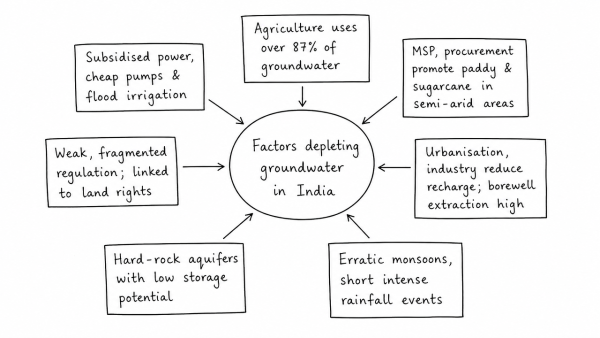
Key drivers: Agriculture consumes about 87% of extracted groundwater; subsidised power, cheap pumps and flood irrigation encourage unchecked pumping. MSP and procurement incentives have expanded water-intensive paddy and sugarcane in semi-arid areas like Punjab and Haryana. Weak and fragmented regulation, where groundwater is linked to land rights and state control, limits enforcement. Urbanisation and industry reduce recharge through concretisation and heavy borewell use. Hard-rock aquifers with low storage, along with erratic monsoons, short intense rainfall and climate variability, further depress water tables.
Government response: The Central Ground Water Authority regulates extraction through no-objection requirements in stressed areas and promotes monitoring tools. Model groundwater legislation has been shared with states to improve local and community-based management. Atal Bhujal Yojana supports water budgeting, village water security plans and participatory management in stressed blocks. NAQUIM provides aquifer mapping for site-specific planning. Jal Shakti Abhiyan, Jal Sanchay Jan Bhagidari and Mission Amrit Sarovar promote rainwater harvesting, recharge structures and restoration of water bodies, while PMKSY’s micro-irrigation component expands drip and sprinkler use.
Overall, groundwater depletion needs crop diversification, efficient irrigation, recharge, and stronger local regulation and pricing discipline.