Examine how unilateral economic sanctions imposed by global powers affect India’s strategic autonomy in securing its diverse energy interests abroad.
Unilateral economic sanctions by major powers, especially when applied extraterritorially, reduce India’s room for independent energy decision-making. For a large importer, they convert commercial energy choices into geopolitical risks.
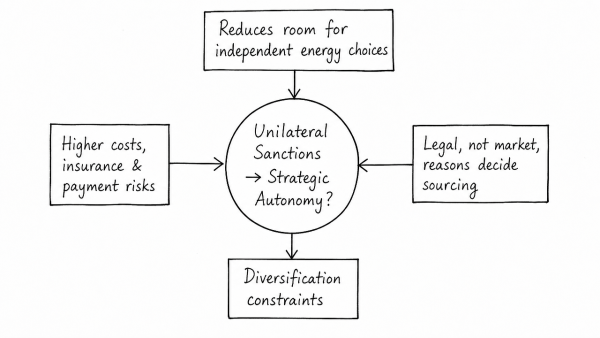
- Strategic autonomy: India seeks the cheapest and most reliable supplies, but sanctions on Iran, Venezuela or Russia can force it to change sourcing for legal, not market, reasons.
- Cost and security: Sanctioned energy may be discounted, yet restrictions raise replacement costs, freight and insurance premiums, and disrupt banking, shipping and payments, making imports less predictable.
- Diversification constraints: India has broadened sourcing and overseas investments, but dependence on any one discounted supplier creates fresh vulnerability and weakens bargaining power.
- Wider spillovers: Secondary sanctions or tariff threats can hit exports, weaken the rupee and fuel inflation by raising the import bill, affecting the broader economy.
India has responded through supplier diversification, strategic reserves, alternative payment channels and greater emphasis on domestic production and renewables, but unilateral sanctions still constrain autonomy by raising costs and tying energy security to external political choices.
Originally written on
September 23, 2026
and last modified on
September 23, 2026.