Examine critically the various facets of economic policies of the British in India from mid-eighteenth century till independence. (UPSC 2014)
British economic policy in India was chiefly designed to serve imperial interests, not Indian development. From the mid-eighteenth century to 1947, it moved through mercantilist, industrial capitalist and financial capitalist phases, each deepening India’s subordination.
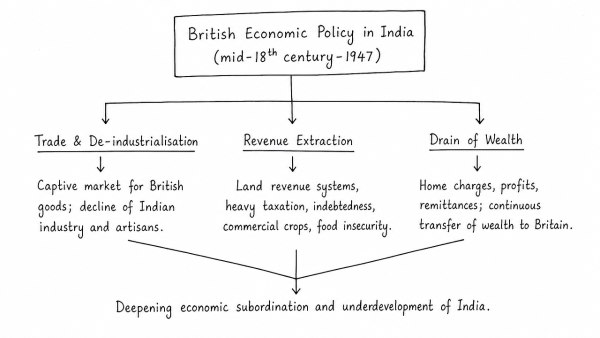
- Trade and de-industrialisation: India was made a captive market for British manufactures after 1813. Indian textiles faced unfair duties abroad, while machine-made goods entered India cheaply, weakening artisans and shrinking towns.
- Revenue extraction: Permanent Settlement, Ryotwari and Mahalwari systems maximised land revenue. Heavy taxation, peasant indebtedness and forced commercial crops reduced food security and rural welfare.
- Drain of wealth: Surplus was transferred through “Home Charges”, pensions, debt servicing and war expenses. India financed its own exploitation through revenue collected here.
- Infrastructure with bias: Railways, ports and plantations expanded, but mainly to move raw materials, troops and profits. The guaranteed return system protected British capital, not Indian industry.
Thus, British policies created a modern colonial economy, but one marked by de-industrialisation, agrarian distress and persistent poverty rather than balanced growth.
Originally written on
August 29, 2026
and last modified on
September 7, 2026.