Evaluate the nature of the Bhakti Literature and its contribution to Indian culture. (UPSC 2021)
Bhakti literature was a powerful medieval cultural movement that made devotion personal, emotional and accessible. It moved away from rigid ritualism and courtly Sanskrit to regional languages, allowing ordinary people to engage with religious ideas.
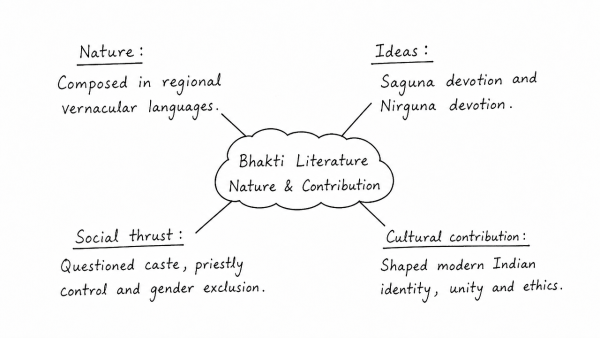
- Nature: It was composed in vernaculars such as Tamil, Braj, Awadhi, Marathi and Kannada.
- Ideas: It included both saguna devotion to a personal god and nirguna devotion to the formless divine.
- Social thrust: It questioned caste hierarchy, priestly control and gender exclusion through voices like Kabir, Ravidas, Mirabai and Andal.
- Cultural contribution: It shaped modern Indian languages and their literary forms.
- Integration: It promoted spiritual sharing across communities, enriching Hindu, Sufi and Sikh traditions.
- Arts: It inspired bhajans, kirtans, abhangas, vachanas, dance-drama and oral performance traditions.
Thus, Bhakti literature was not only devotional writing but also a vehicle of linguistic growth, social reform and cultural synthesis, leaving a deep and lasting imprint on Indian civilisation.
Originally written on
September 2, 2026
and last modified on
September 2, 2026.