Enumerate the problems and prospects of inland water transport in India. (UPSC 2016)
Inland water transport is a cheap, energy-efficient and eco-friendly mode, but its share in Indian freight remains low despite about 14,500 km of navigable waterways and 111 national waterways.
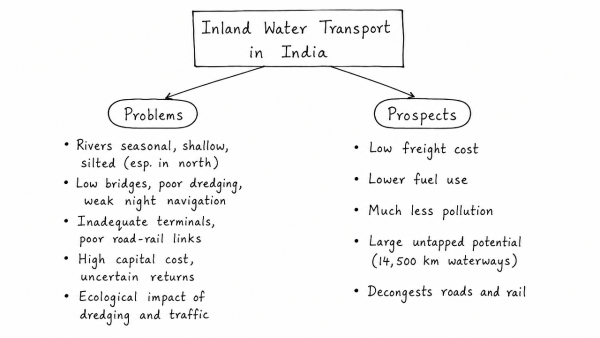
- Problems: Rivers are seasonal, shallow and heavily silted, especially in the north; low bridges, poor dredging, weak night navigation and inadequate terminals reduce reliability.
- Problems: Poor road-rail links, slow cargo handling, high capital costs and uncertain returns deter private investment; dredging and traffic may also affect sensitive river ecosystems.
- Prospects: It offers low freight cost, lower fuel use and much less pollution; one barge can replace many trucks.
- Prospects: New laws, terminals, cargo incentives, multimodal projects and links with Bangladesh and Myanmar can boost trade and regional connectivity.
With better infrastructure, connectivity and ecological safeguards, inland waterways can become a stronger pillar of India’s logistics and green growth.
Originally written on
August 30, 2026
and last modified on
August 30, 2026.