Elaborate the impact of National Watershed Project in increasing agricultural production from water-stressed areas. (UPSC 2019)
National Watershed Project has helped turn water-stressed rainfed areas into more productive farm systems. By conserving soil moisture, recharging groundwater and reducing runoff, it improves the reliability of cultivation where irrigation is scarce.
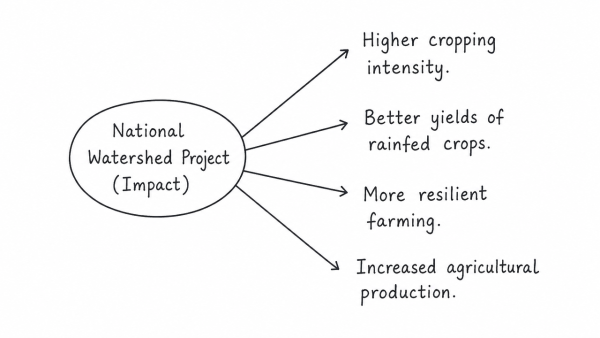
- Higher cropping intensity: Moisture retention has enabled double and even triple cropping in many treated areas, raising cropping intensity significantly.
- Better yields: Rainfed crops such as millets, pulses and oilseeds have recorded clear yield gains due to timely supplementary moisture and improved soils.
- More resilient farming: Watershed treatment reduces erosion, restores degraded land and expands cultivable area, making farming less risky in drought-prone tracts.
- Livelihood gains: It supports integrated farming, fodder development and allied activities, which raises farm incomes and diversifies production away from water-intensive crops.
Its wider impact lies in shifting water use from mere harvesting to efficient, sustainable productivity. However, long-term gains depend on community maintenance, convergence with irrigation schemes and scientific planning.
Originally written on
September 1, 2026
and last modified on
September 1, 2026.