Economic ties between India and Japan while growing in the recent years are still far below their potential. Elucidate the policy constraints which are inhibiting this growth. (UPSC 2013)
India-Japan economic ties have grown, but remain well below potential because of policy and regulatory frictions.
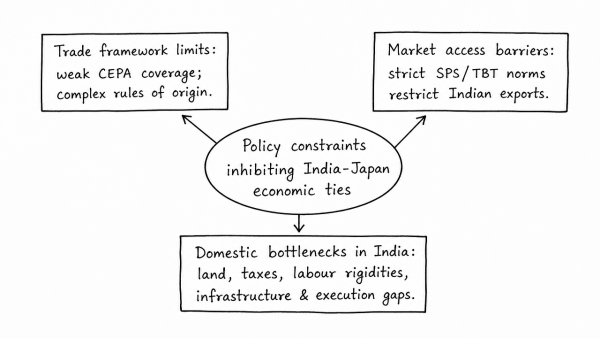
- Trade framework limits: The CEPA has weak coverage of digital trade, green goods and modern supply chains; complex rules of origin reduce effective use of tariff concessions.
- Market access barriers: Japan’s strict SPS and TBT standards restrict Indian exports of farm products, marine goods, pharmaceuticals, textiles and leather.
- Domestic bottlenecks in India: Land acquisition delays, tax compliance burdens, labour rigidities and poor infrastructure slow Japanese investment; execution gaps in corridors and rail projects hurt confidence.
- Policy uncertainty: Frequent regulatory changes and weak predictability deter long-term Japanese firms, especially SMEs.
- Competing destinations: Vietnam and Thailand offer faster logistics and lower costs, diverting Japanese diversification.
Thus, modernising the trade pact, harmonising standards and improving ease of doing business can unlock far deeper economic engagement.
Originally written on
August 28, 2026
and last modified on
September 7, 2026.