Early Buddhist Stupa-art, while depicting folk motifs and narratives, successfully expounds Buddhist ideals. Elucidate. (UPSC 2016)
Early Buddhist stupa art used familiar folk images, yet it conveyed the Buddha’s teaching with clarity. By avoiding direct representation of the Buddha, it made abstract ideas visible to ordinary people.
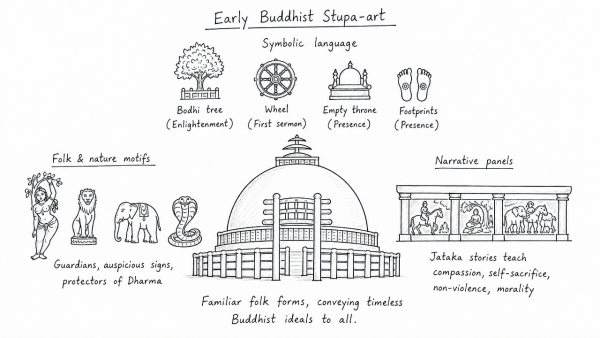
- Symbolic language: The Bodhi tree, wheel, empty throne and footprints stood for enlightenment, the first sermon and presence of the Buddha.
- Folk and nature motifs: Yakshis, shalabhanjikas, lions, elephants, nāgas and other local forms were adapted as guardians, auspicious signs and protectors of the Dharma.
- Narrative panels: Jataka stories on railings and gateways taught compassion, self-sacrifice, non-violence and moral discipline through simple visual storytelling.
- Public accessibility: These images suited an oral, largely illiterate society and linked Buddhist ethics with popular beliefs, making the faith culturally rooted.
Thus, early stupa art was not mere decoration. It blended folk idiom with Buddhist symbolism to spread ideals of renunciation, moral conduct and liberation in a form that was both appealing and profound.
Originally written on
August 30, 2026
and last modified on
August 30, 2026.