Each year a large amount of plant material, cellulose, is deposited on the surface of Planet Earth. What are the natural processes this cellulose undergoes before yielding carbon dioxide, water and other end products? (UPSC 2022)
Cellulose is the main structural carbohydrate of plants and is highly resistant to breakdown because of its long, tightly packed chains. Yet in nature it is steadily recycled by physical, biological and chemical processes.
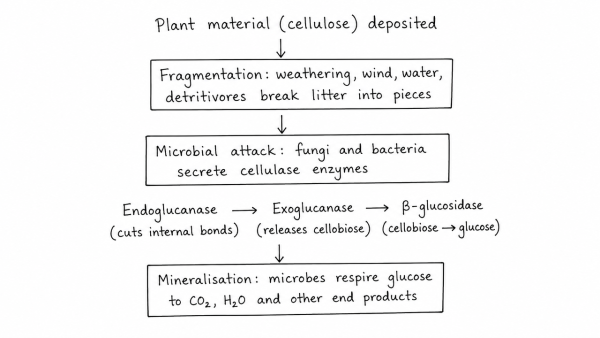
- Fragmentation: Weathering, freeze-thaw action, wind, water and detritivores such as earthworms and termites break plant litter into smaller pieces.
- Microbial attack: Fungi and bacteria colonise the litter and secrete cellulase enzymes. Endoglucanase cuts internal bonds, exoglucanase releases cellobiose, and beta-glucosidase converts it into glucose.
- Mineralisation: In aerobic conditions, microbes respire glucose to carbon dioxide and water. In oxygen-poor soils, it is fermented to organic acids and, through methanogenesis, may yield methane, carbon dioxide and water.
- Humification: A part is transformed into stable humus and stored in soil for long periods.
Thus, cellulose finally returns to the atmosphere and soil as gases, water and humus, making it a key part of the carbon cycle.
Originally written on
September 3, 2026
and last modified on
September 3, 2026.