Drought has been recognized as a disaster in view of its spatial expanse, temporal duration, slow onset and lasting effects on vulnerable sections. With a focus on the September 2010 guidelines from the National Disaster Management Authority (NDMA), discuss the mechanisms for preparedness to deal with likely El Niño and La Niña fallouts in India. (UPSC 2014)
Drought is a slow-onset disaster with wide spatial spread and severe impacts on farmers, labourers and livestock. NDMA’s September 2010 guidelines stress advance preparedness, scientific assessment and quick response to likely El Niño/La Niña fallout.
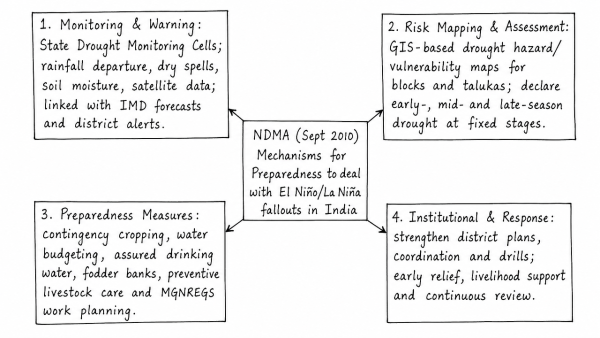
- Monitoring and warning: Create State Drought Monitoring Cells; use rainfall departure, dry spells, soil moisture and satellite data, linked with IMD seasonal forecasts and district alerts.
- Risk mapping and assessment: Prepare GIS-based drought hazard/vulnerability maps for blocks and talukas, and declare early-, mid- and late-season drought at fixed stages.
- Preparedness measures: Plan contingency cropping, water budgeting, reservoir management, drinking water supply, fodder banks, crop advisories and employment/relief works through coordinated action by agriculture, irrigation, revenue and local bodies.
For El Niño, conserve water and protect crops; for La Niña, harvest excess rain, manage runoff and prevent erosion, so losses remain localized and manageable.
Originally written on
August 29, 2026
and last modified on
August 29, 2026.