Does the Rights of Persons with Disabilities Act, 2016 ensure effective mechanism for empowerment and inclusion of the intended beneficiaries in the society? Discuss. (UPSC 2017)
The Rights of Persons with Disabilities Act, 2016 is a major shift from charity to rights. It widens recognised disabilities, increases reservations, and creates duties on the State for accessibility and reasonable accommodation.
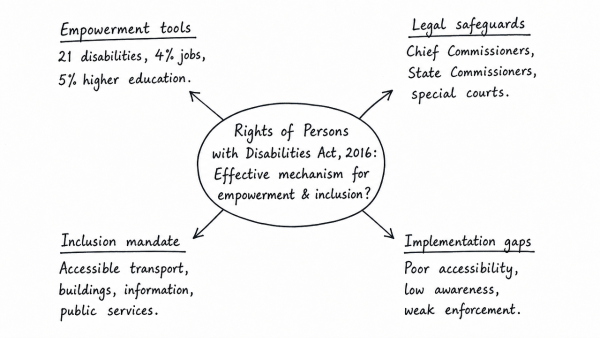
- Positive empowerment tools: 21 disability categories, 4% job reservation and 5% in higher education for benchmark disabilities strengthen access.
- Legal safeguards: Chief Commissioners, State Commissioners, advisory boards and special courts provide grievance redressal and monitoring.
- Inclusion mandate: The Act obliges accessible transport, buildings, information and public services, which is vital for social participation.
- Implementation gaps: Poor disability certification, delayed UDID coverage, weak accessibility compliance and digital barriers limit real access.
- Employment gap: Private sector hiring remains low, and many posts are not adapted through reasonable accommodation.
- Federal weakness: Uneven state rules, low awareness and limited budget support reduce effectiveness.
Thus, the Act provides a strong framework for empowerment and inclusion, but it is only partly effective in practice. Real change needs stricter enforcement, accessible infrastructure, adequate funding and attitudinal change.
Originally written on
August 31, 2026
and last modified on
August 31, 2026.