Discuss the significance of the lion and bull figures in Indian mythology, art and architecture. (UPSC 2022)
The lion and the bull are among the most powerful animal symbols in Indian civilisation. They appear across mythology, sculpture and temples, where they express ideas of power, fertility, devotion and moral order.
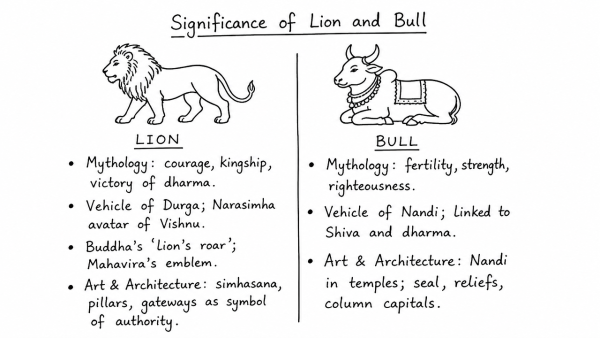
- Lion in mythology: It stands for courage, kingship and the victory of dharma over adharma. It is the vehicle of Durga, appears in Vishnu’s Narasimha avatar, and is central in Buddhism as the Buddha’s “lion’s roar” and in Jainism as Mahavira’s emblem.
- Lion in art and architecture: The lion-seat or simhasana became a symbol of authority. The Sarnath Lion Capital is the finest example, projecting imperial dignity and the spread of dhamma. Lion figures also decorate gateways, pillars and temple entrances to express grandeur and protection.
- Bull in mythology: The bull is Nandi, Shiva’s mount, symbolising devotion, patience and strength. In Jainism, it is the emblem of Rishabhanatha, the first Tirthankara. The bull is also linked with fertility, agriculture and the idea of dharma.
- Bull in art and architecture: Harappan seals show the zebu bull and unicorn bull, reflecting early economy and ritual life. Mauryan sculpture reached a high point in the Rampurva Bull Capital. In temples, Nandi is placed facing the sanctum, showing his role as the ideal devotee.
Together, the lion and bull reveal how Indian culture fused sacred ideas with political authority and artistic expression. They are not just animal motifs, but enduring symbols of civilisation, ethics and social order.
Originally written on
September 3, 2026
and last modified on
September 3, 2026.