Discuss the role of the National Commission for Backward Classes in the wake of its transformation from a statutory body to a constitutional body. (UPSC 2022)
The National Commission for Backward Classes (NCBC) has gained far greater constitutional authority after its transformation from a statutory to a constitutional body under the 102nd Amendment. It now serves as the main institution for protecting the interests of socially and educationally backward classes.
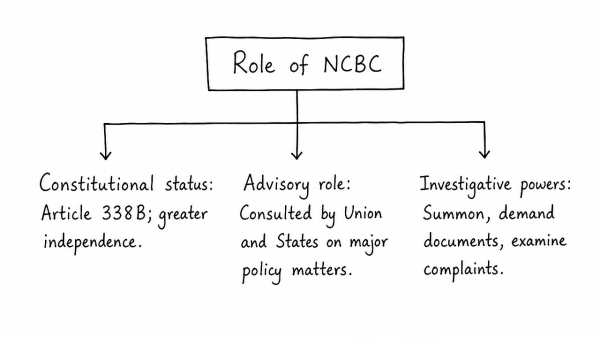
- Constitutional status: Article 338B gives it a defined mandate, making it more independent and visible in governance.
- Advisory role: It must be consulted by the Union and States on major policy matters affecting SEBCs.
- Investigative powers: It can summon persons, demand documents and examine complaints like a civil court.
- Wider oversight: It monitors safeguards, development measures and grievance redress for backward classes.
- Federal balance: After the 105th Amendment, States also retained power to identify their own SEBC lists.
Thus, the NCBC is now a stronger constitutional watchdog. However, its recommendations remain advisory, so its impact still depends on political will and timely implementation.
Originally written on
September 3, 2026
and last modified on
September 3, 2026.