Discuss the role of land reforms in agricultural development. Identify the factors that were responsible for the success of land reforms in India. (UPSC 2016)
Land reforms were intended to remove exploitative agrarian structures and make cultivators secure in land use. They helped raise productivity by creating stronger incentives, better access to credit and a fairer distribution of land.
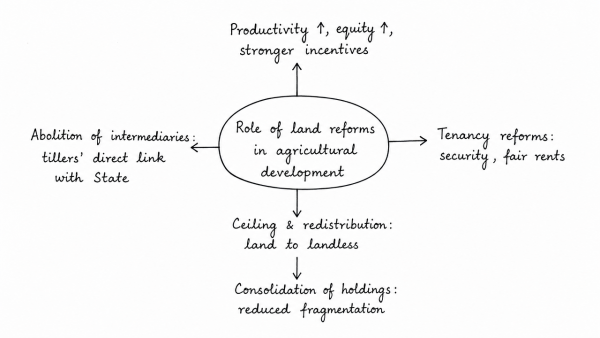
- Abolition of intermediaries: Zamindari removal ended rent-seeking and gave tillers a direct link with the State.
- Tenancy reforms: Security of tenure and fair rents reduced eviction fears, encouraging investment in seeds, irrigation and fertilisers.
- Ceiling laws and redistribution: Surplus land to the landless improved equity and expanded productive use of land.
- Consolidation of holdings: Reduced fragmentation, lowered costs and enabled better farm management and mechanisation.
- Credit access: Secure titles worked as collateral, helping farmers shift from moneylenders to formal institutions.
Why some reforms succeeded in India
- Strong political will, especially in reform-minded states.
- Mass peasant mobilisation and pressure from agrarian movements.
- Clear laws with fewer loopholes on tenancy and ceiling surplus.
- Efficient local administration and land records.
- Higher literacy and social awareness among rural people.
Thus, land reforms supported agricultural growth not merely by redistributing land, but by changing incentives, reducing insecurity and widening access to resources. Their success depended mainly on political commitment, public participation and administrative capacity.
Originally written on
August 30, 2026
and last modified on
August 30, 2026.