Discuss the procedures to decide the disputes arising out of the election of a Member of the Parliament or State Legislature under the Representation of the People Act, 1951. What are the grounds on which the election of any returned candidate may be declared void? What remedy is available to the aggrieved party against the decision? Refer to the case laws. (UPSC 2022)
Election disputes for Parliament/State Legislature are governed by Article 329(b) and the Representation of the People Act, 1951; no election can be questioned except by an election petition. Under section 80A, the petition lies to the High Court and may be filed by a candidate or elector within 45 days of the result. It is tried by a single judge under the CPC as far as applicable; strict compliance with sections 81, 83 and 86 is required, and petitions violating filing requirements or lacking material facts/particulars of corrupt practice are liable to dismissal. In N.P. Ponnuswami v. Returning Officer, the Court held that elections are a continuing process and the proper remedy is the statutory petition after the result.
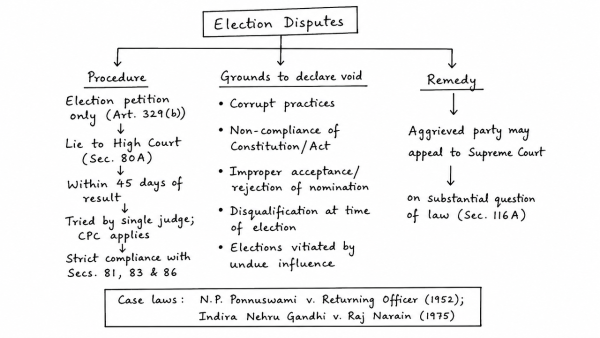
- Grounds for declaring election void (section 100): the returned candidate was not qualified/disqualified on the date of election; corrupt practice by the returned candidate, election agent or with consent; improper rejection of a nomination paper; or the result was materially affected by improper acceptance of a nomination, reception/rejection of votes, or non-compliance with the Constitution, the Act or rules. In Abhiram Singh v. C.D. Commachen, electoral appeals on religion, race, caste, community or language were held prohibited as corrupt practice.
- Further relief: If the petitioner proves that he secured a majority of valid votes, the court may declare him duly elected under section 101.
Against the High Court’s final decision, an appeal lies to the Supreme Court under section 116A; Indira Nehru Gandhi v. Raj Narain affirmed judicial scrutiny of election disputes as part of constitutional democracy.