Discuss the main contributions of Gupta period and Chola period to Indian heritage and culture. (UPSC 2022)
The Gupta and Chola periods are two high points of Indian civilisation. The Guptas shaped classical Indian culture through learning, art and science, while the Cholas enriched heritage through temple architecture, bronze sculpture and local self-government.
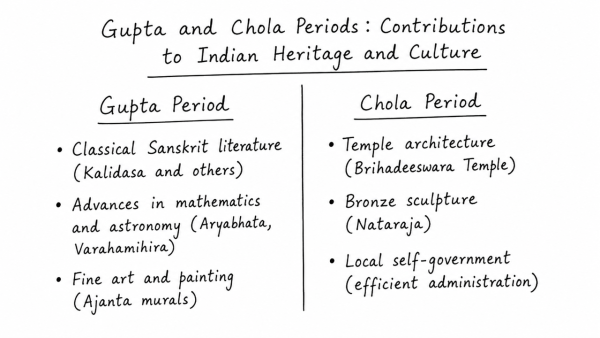
- Gupta period: cultural and intellectual flowering
- Marked the rise of classical Sanskrit literature, with works of Kalidasa and others giving lasting literary forms and ideals.
- Produced major advances in mathematics and astronomy through scholars like Aryabhata and Varahamihira, strengthening India’s scientific tradition.
- Encouraged fine art and painting, seen in the Ajanta murals, which became a benchmark for Indian mural art.
- Supported religious and philosophical development, especially Hinduism, Buddhism and Jainism, with a refined sense of iconography and temple worship.
- Chola period: artistic and institutional legacy
- Created some of the finest temple complexes in India, such as Brihadisvara at Thanjavur, Gangaikondacholapuram and Airavatesvara, now recognised as great living temples.
- Developed Chola bronzes, especially the Nataraja image, which represent technical mastery and spiritual symbolism.
- Built a strong maritime tradition, linking India with Southeast Asia through trade, cultural contact and naval power.
- Left an important legacy of village self-government through the Uttaramerur inscriptions, showing organised local administration and electoral practices.
- Also symbolised righteous rule through the Sengol, reflecting ideas of ethical kingship and political legitimacy.
Together, the Gupta period gave India a classical cultural framework, while the Chola period added grandeur in art, architecture and governance. Both continue to shape India’s heritage, identity and civilisational memory.
Originally written on
September 3, 2026
and last modified on
September 3, 2026.