Discuss Section 66A of IT Act, with reference to its alleged violation of Article 19 of the Constitution. (UPSC 2013)
Section 66A of the IT Act, inserted by the 2008 amendment, criminalised sending “grossly offensive”, “menacing” or knowingly false messages through electronic means. It provided for arrest and imprisonment up to three years, but its wording was vague and wide.
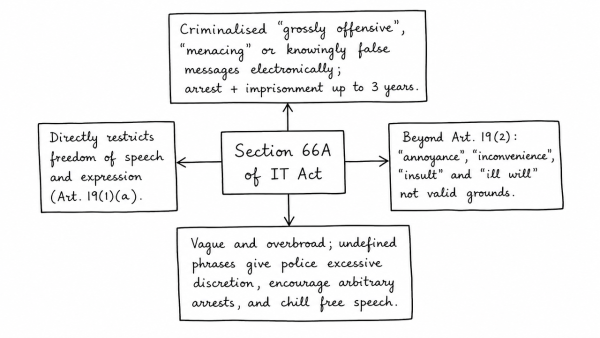
- Conflict with Article 19(1)(a): It directly restricted freedom of speech and expression in the online space.
- Beyond Article 19(2): Terms like “annoyance”, “inconvenience”, “insult” and “ill will” are not valid grounds for reasonable restriction under Article 19(2).
- Vagueness and overbreadth: Undefined phrases gave police excessive discretion, encouraged arbitrary arrests, and created a chilling effect on lawful dissent.
- No incitement standard: The law punished speech even when it did not create a clear, proximate threat to public order.
In Shreya Singhal v. Union of India (2015), the Supreme Court struck down Section 66A as unconstitutional. The case affirmed that offensive speech may be debated or answered, but cannot be criminalised unless it falls within the narrow limits of Article 19(2).
Originally written on
August 28, 2026
and last modified on
September 7, 2026.