Despite consistent experience of high growth, India still goes with the lowest indicators of human development. Examine the issues that make balanced and inclusive development elusive. (UPSC 2019)
India’s high GDP growth has not translated into commensurate human development, creating a paradox of rising income with weak health, education and living standards.
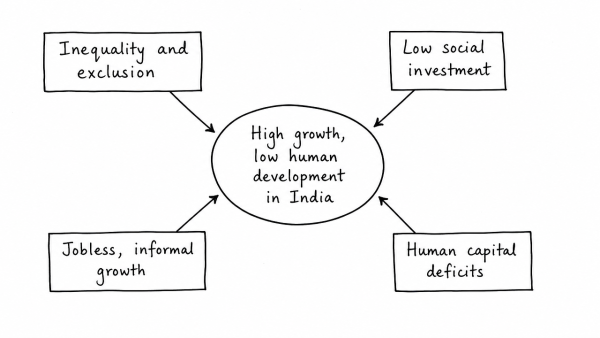
- Inequality and exclusion: Benefits of growth are concentrated among the rich; caste, gender and rural-urban divides limit access to opportunities.
- Low social investment: Public spending on health, education and nutrition remains inadequate, causing poor outcomes and high out-of-pocket burden.
- Jobless, informal growth: Growth has generated too few secure jobs; underemployment, low female participation and informal work keep incomes insecure.
- Human capital deficits: Malnutrition, learning gaps and weak primary healthcare reduce productivity and intergenerational mobility.
Balanced and inclusive development remains elusive because growth is insufficiently redistributive and not backed by strong public services, decent jobs and targeted social protection.
Originally written on
September 1, 2026
and last modified on
September 1, 2026.