Critically examine the Supreme Court’s judgement on ‘National Judicial Appointments Commission Act, 2014’ with reference to appointment of judges of higher judiciary in India. (UPSC 2017)
The Supreme Court struck down the NJAC Act, 2014, holding that judicial independence is part of the Constitution’s basic structure. It restored the Collegium system for appointing judges to the higher judiciary, but the ruling remains deeply contested.
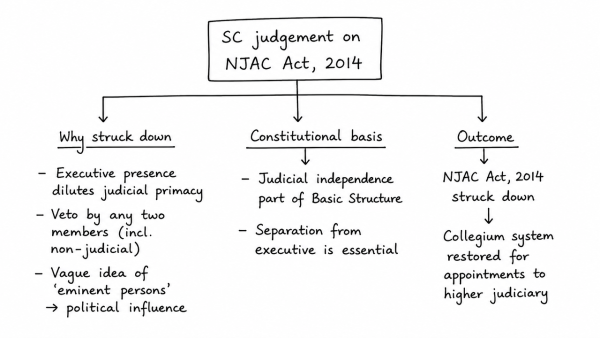
- Why it was struck down: The Court said executive presence in the NJAC could dilute judicial primacy. The veto given to any two members, including non-judicial ones, and the vague idea of “eminent persons” raised concerns of political influence.
- Constitutional basis: The judgment treated independence of the judiciary and separation from the executive under Article 50 as essential safeguards.
- Critical concern: The verdict preserved the “judges appointing judges” model, which is often seen as opaque, self-selecting and weak on accountability.
- Merits of NJAC: It sought wider participation, greater openness and a more plural process.
Thus, the Court protected institutional independence, but it also left unresolved the problems of transparency, diversity and delay in appointments. A reformed collegium with clear criteria and accountability may better balance independence with legitimacy.
Originally written on
August 31, 2026
and last modified on
August 31, 2026.