Critically examine the ethical dilemmas of intergenerational equity as a shrinking working population supports a massive elderly cohort. How should state policies balance resources between youth and seniors?
Intergenerational equity asks the State to act as a trustee for both present and future citizens. In an ageing society, this becomes ethically difficult: a shrinking workforce must fund pensions, healthcare and care services for a large elderly cohort, while also investing in children and young adults who will sustain tomorrow’s economy.
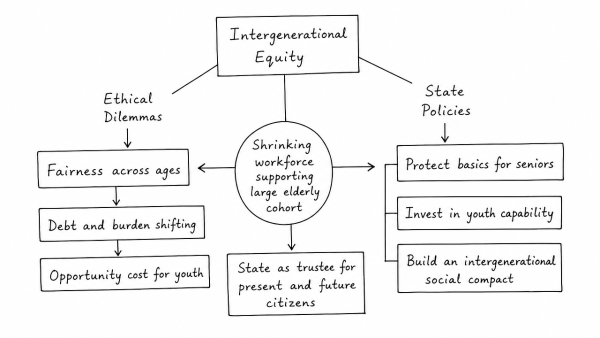
Ethical dilemmas
- Fairness across ages: senior citizens deserve dignity, but excessive transfers can crowd out spending on education, jobs and nutrition for the young.
- Debt and burden shifting: unfunded pensions and rising borrowing may amount to passing today’s consumption costs to future taxpayers.
- Need versus contribution: many elderly people, especially in the informal sector, have no pension or savings, yet some long-serving beneficiaries may receive more than they contributed.
- Gender and regional inequality: elderly women and poorer states face greater vulnerability, so equal treatment may still be unjust.
Policy balance
- Protect basic dignity: universal minimum pension, geriatric primary care, and cashless treatment for the poorest elderly.
- Target subsidies by vulnerability, not age alone; support the frail, widowed, disabled and poor seniors first.
- Invest in youth capabilities: quality schooling, skilling, health, and job creation to widen the tax base supporting ageing costs.
- Expand formal retirement savings and long-term care insurance, reducing future fiscal stress.
- Promote active ageing, flexible work, and community caregiving so seniors remain contributors, not only dependants.
The right balance is not a zero-sum choice between the young and the old. A just State must secure minimum protection for seniors while prioritising human capital formation for the young, because only a productive workforce can finance a humane welfare system for all generations.
Originally written on
September 15, 2026
and last modified on
September 15, 2026.