Critically examine the effects of globalisation on the aged population in India. (UPSC 2013)
Globalisation has transformed old age in India by improving access to services, but it has also weakened traditional support systems. For a country where the elderly share is rising fast, its effects are mixed and uneven.
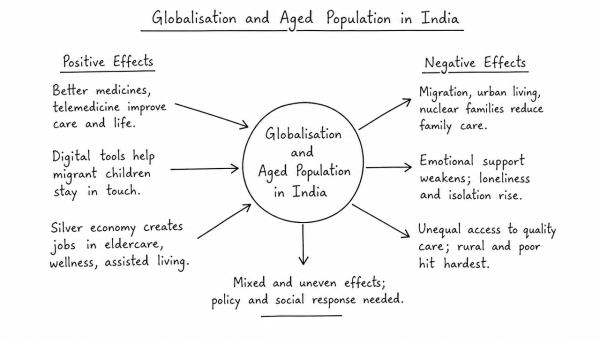
- Positive effects: better medicines, telemedicine and private geriatric services have improved life expectancy and care. Digital tools help migrant children stay in touch, reducing loneliness. A growing silver economy has created jobs in eldercare, wellness and assisted living.
- Negative effects: migration, urban living and nuclear families have reduced family care and emotional support. Many seniors face isolation, neglect and abuse, especially widowed women and the poor. Market-based health care, inflation and out-of-pocket spending strain fixed incomes.
- Digital exclusion: rapid digitisation of banking, pensions and health services often excludes those lacking digital literacy.
Thus, globalisation has brought convenience and longer lives, but also greater insecurity and loneliness. Its benefits must be made inclusive through social security, geriatric health care, digital support and stronger legal protection for senior citizens.
Originally written on
August 28, 2026
and last modified on
September 6, 2026.