Critically examine how green building rating systems like GRIHA can transform sustainable urban development in India. What are the major challenges in their widespread adoption?
Green building rating systems such as GRIHA can become a strong driver of sustainable urban development in India. By assessing a building across its full life cycle, they shift cities from resource-intensive growth to efficient, low-carbon and healthier urban form.
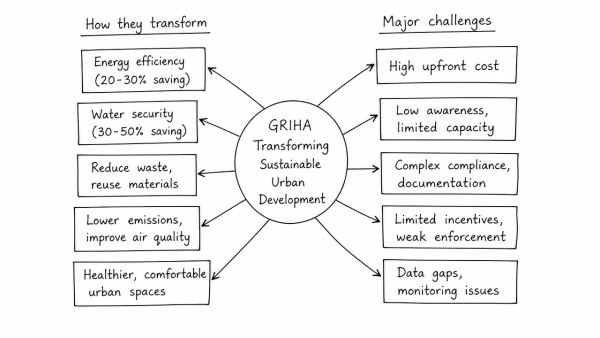
- How they transform urban development
- They promote energy efficiency, cutting power use by about 20-30% in typical green buildings and more in certified projects.
- They improve water security through rainwater harvesting, low-flow fixtures and wastewater reuse, reducing demand by 30-50%.
- They reduce construction and operational waste, encourage reuse of materials, and support circular economy practices.
- They improve indoor air quality, daylight and thermal comfort, which raises public health and productivity in dense urban areas.
- They reduce municipal pressure on electricity, water supply and waste systems, making cities more resilient.
- They also influence regulations such as ECBC and NBC, helping green standards move from optional to mainstream.
- Major challenges in wider adoption
- High upfront cost perception remains the biggest barrier, even though long-term operating savings are substantial.
- Low awareness among builders, buyers and local bodies keeps green buildings seen as a niche option.
- Uneven incentives across states, including FAR/FSI benefits and rebates, limit uniform uptake.
- Skill gaps in design, construction and maintenance affect quality and confidence.
- Limited supply and higher cost of green materials slow adoption, especially beyond metros.
- Weak enforcement and complex certification reduce compliance and delay project delivery.
Thus, GRIHA can shape cleaner, more efficient and liveable cities, but its impact will remain partial unless incentives are standardised, capacity is built, and green norms are integrated into planning and building approvals.————-
Originally written on
September 12, 2026
and last modified on
September 12, 2026.