Critically discuss how the co-location of floating solar systems with existing hydroelectric reservoirs can optimize transmission infrastructure and manage peak-load demands in India.
Co-location of floating solar with hydroelectric reservoirs offers India a practical way to expand clean power without large land take or major new grid build. It can turn existing dam sites into hybrid generation hubs, improving transmission use and system flexibility at the same time.
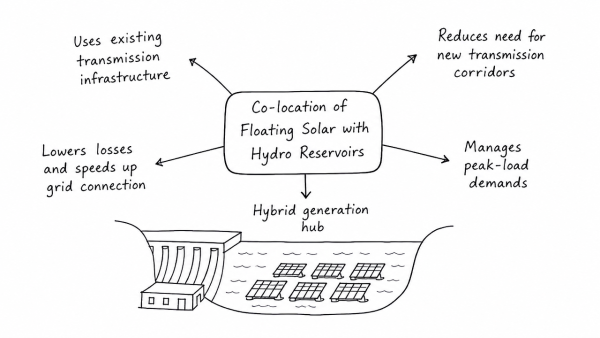
- Optimising transmission infrastructure
- Reservoir-based solar can use existing evacuation lines, substations and right of way of hydropower stations.
- This reduces the need for new transmission corridors, land acquisition and long approval cycles.
- It also lowers losses and helps faster grid connection, especially where transmission projects are delayed.
- By using common infrastructure for hydro, floating solar and storage, the same network carries more energy across more hours.
- Managing peak-load demand
- Solar output is highest in the day, while demand peaks often come in the evening.
- Hydro plants can quickly ramp up when solar generation falls, giving firm and dispatchable power.
- If co-located with battery storage, surplus solar can be stored and released during evening peaks.
- Where pumped storage exists, daytime solar can support pumping, creating a low-carbon storage cycle.
- Additional gains
- Floating solar reduces pressure on scarce land and can cut evaporation from reservoirs.
- Water cooling may improve panel efficiency.
- Such hybrid sites can strengthen grid stability and help integrate higher renewable shares.
- Critical concerns
- Higher upfront costs, mooring challenges, water-level changes and O&M difficulties raise project risk.
- Ecological impacts on water quality and biodiversity need careful assessment.
Overall, co-location is a smart grid strategy for India: it lowers transmission burden, improves renewable dispatchability and supports peak-load management. Its success, however, depends on careful design, storage integration and environmental safeguards.
Originally written on
September 12, 2026
and last modified on
September 12, 2026.